
A hidden world beneath our feet
The history of salt extends far beyond its role in the kitchen, weaving through the annals of history as a precious commodity that has shaped economies, cultures and even empires. Salt mines are an underground wonder that, while serving for centuries as a source of wealth through the extraction of this prized mineral, have also drawn visitors from around the world, captivated by the history and enduring significance of these sites.
The European Historic Salt Production Route invites us to discover the most noteworthy salt mines and explore the unique features and characteristics of each of these subterranean paradises. Here are some of the most impressive.

1.The Salt Mountain of Cardona (Catalonia)
“A great mountain of pure salt that grows as it is extracted.” This is how, according to Aulus Gellius, Cato described one of the most important salt mines in the world, the Cardona mine, in the second century.
The Salt Mountain Cultural Park is located in the heart of Catalonia. A visit here will captivate you with its striking salt outcrops and the exceptional display of varied geology within its galleries. The combination of geological, historical and industrial heritage makes Cardona a must-see on this route – an essential stop to understand the importance of white gold.
Cardona is also renowned for its tradition of salt artistry. A visit to the Josep Arnau art gallery is highly recommended, and you can even participate in a workshop hosted by local salt sculptors.
2. Wieliczka Salt Mine (Poland)
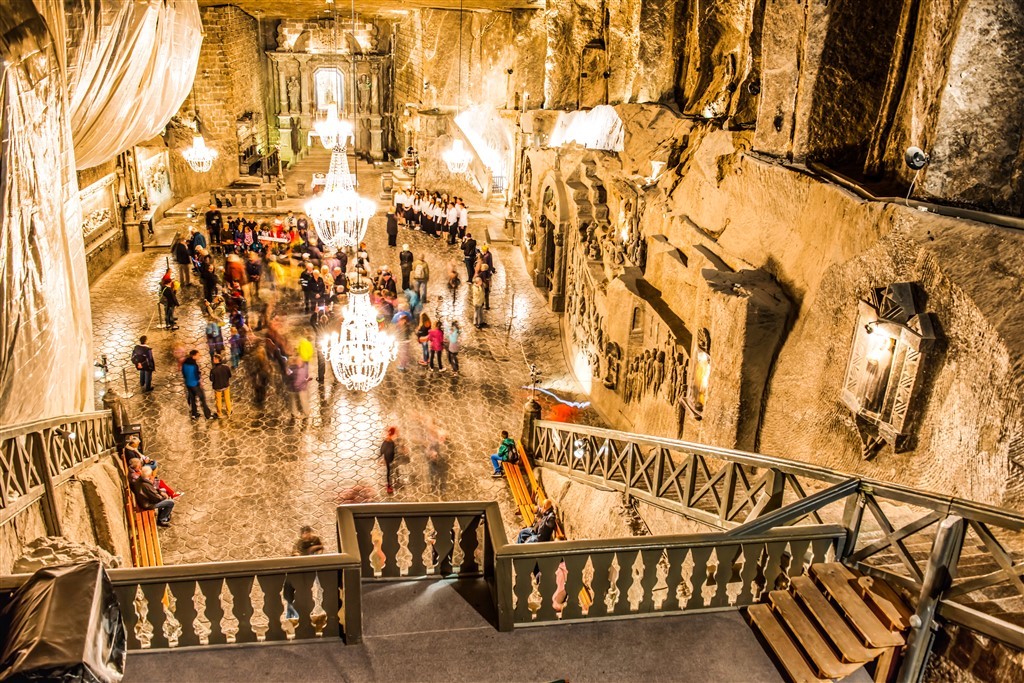
The Wieliczka Salt Mine and the Saltworks Castle, located in southern Poland, are monumental testaments to human craftsmanship and the natural beauty of salt formations.
Having operated continuously for over 700 years, this mine is not only one of the largest salt mines in Europe but also a significant cultural and historical landmark, recognised as a UNESCO World Heritage Site.
The tourist route through the Wieliczka Salt Mine features a wealth of salt monuments and statues, artworks carved directly into salt deposits and an extensive collection of preserved mining machinery. The famous underground Catholic church, the Chapel of St Kinga, patron saint of miners, attracts thousands of pilgrims every year.

3. Salina Turda Salt Mine (Romania)
The Salina Turda Salt Mine, located in the heart of Transylvania, is believed to have been used for salt extraction since classical times. The earliest records of salt mining at Salina Turda date back to 1075, and it remained active until 1932, making it one of the longest-operating salt mines in history.
Among the most popular attractions are the mine’s conical main hall, Losif, and the underground lake, featuring an impressive artistic installation on an island within the Terezia mine. During the Second World War, it served as a highly secure bomb shelter and was even used as a facility for curing cheese.

4. Berchtesgaden Salt Mine (Germany)
Salzbergwerk Berchtesgaden is an active salt mine with a tourist route that opened in 1880. Modernised in 2007, it now features a miner’s train, a ferry crossing a subterranean salt lake and thrilling miner’s slides, providing a fun-filled experience for the whole family.

5. Hallstatt Salt Mine (Austria)
Believed to be the oldest salt mine in the world, with 7,000 years of continuous operation, the Hallstatt Salt Mine is accessible either on foot or via a modern funicular (open from late April to late October). Inside, visitors can explore a museum showcasing a replica of the Salt Man, a body discovered in April 1734 preserved in a salt deposit. Amazingly intact, complete with clothing and tools, it is thought that the man died in a mining accident around 1000 BCE.
Visitors can also follow “the oldest water pipeline in the world” on a tour along the historic saltwater conduit trail.
6. Royal Salt Mine of Bochnia (Poland)
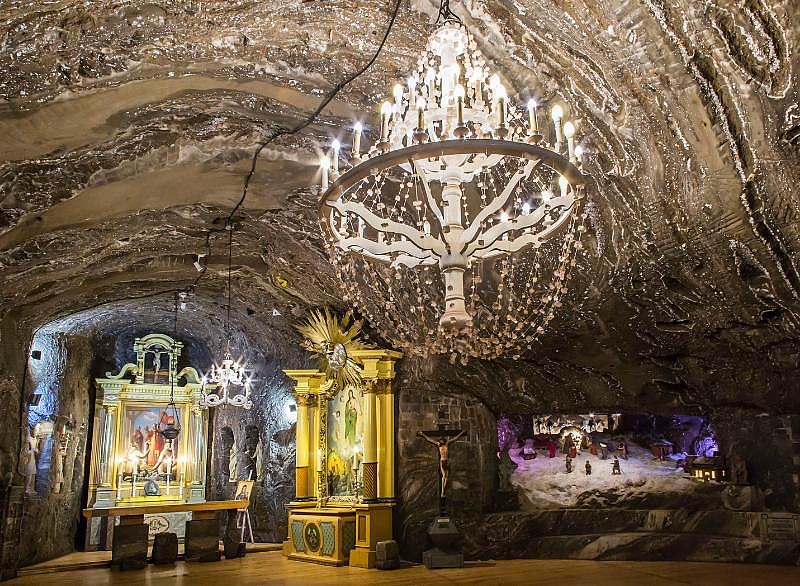
The Bochnia Salt Mine, located in Lesser Poland about 40 km from Krakow, features numerous well-preserved pieces of machinery from the Industrial Revolution and a labyrinth of passages and tunnels spanning over 240 km. The renowned Wazyn Chamber is used as an underground sanatorium due to its air that is rich in sodium and potassium, known for its beneficial effects on the respiratory system.
The Bochnia Salt Mine is recognised as a UNESCO World Heritage Site, alongside its sister facilities in Wieliczka.

7. Slanic Salt Mine (Romania)
Although the Slanic Salt Mine opened in the 20th century, its rapid expansion has made it the largest salt mine in Europe. Many tourists visit to marvel at its vast halls and experience what is described as “the purest air one can breathe”. The mine is so spacious that some areas are even accessible by car!
Discover the hidden treasure of salt beneath our feet. In our region, you can visit the Salt Mountain of Cardona, a truly unique site. Click for more information.
https://cardonaturisme.cat/en/