

The exploitation of salt.
Past, present and future
Registration – Virtual modality
Together with the scientific societies SEDPGYM and SIGMADOT, the Historical Cardona Foundation gives continuity to the International Congress on Salt in the framework of two very important local events: the celebration of the Festival of the Salt of Cardona and the commemoration of 100 years of the beginning of the mining exploitation of potassium salts.
The first two congresses were held in Ciempozuelos (Madrid) in 2006 and 2018. Then followed the editions of Peralta de la Sal (Huesca) in 2019; and Rio Maior (Portugal) in 2024. Cardona’s will be the fifth edition and will deal with the past, present and future of salt exploitation.
THE SALT OF LIFE
Since the beginning of mankind, salt has been much more than just a mineral. It is an essential element for life, indispensable for biological balance, but also a strategic resource that has conditioned landscapes, societies and cultures over time. Their presence has guided human settlements, articulated networks of exchange and generated specific technologies for their extraction, transformation and conservation.
From the geology, salt tells us about ancient seas, tectonic and climatic processes that have shaped the earth and left deep traces in the subsoil and surface. From archaeology, it reveals everyday practices, subsistence economies and power systems, being key to understanding the social organization of numerous communities. And from history, salt emerges as an economic engine, an object of political and fiscal control, and a cultural symbol loaded with meanings.
Exploring salt is therefore to explore the relationship between nature and human societies, between geological processes and cultural constructions. This congress aims to highlight the importance of salt as a common thread linking disciplines, territories and eras, which allows us to understand, from a broad and integrated perspective, its fundamental role in past, present and future life.
Salt is also projected as a strategic resource for the future, in a context marked by energy transition, technological innovation and the need for new conservation models. Its properties place it at the center of developments related to energy storage, resource management and sustainable reuse of mining spaces, as well as advanced applications related to safety and long-term preservation. Thus, salt continues to play a key role as the link between scientific knowledge, technology and sustainability.

CENTENARY OF THE START OF POTASH EXPLOITATION IN CARDONA
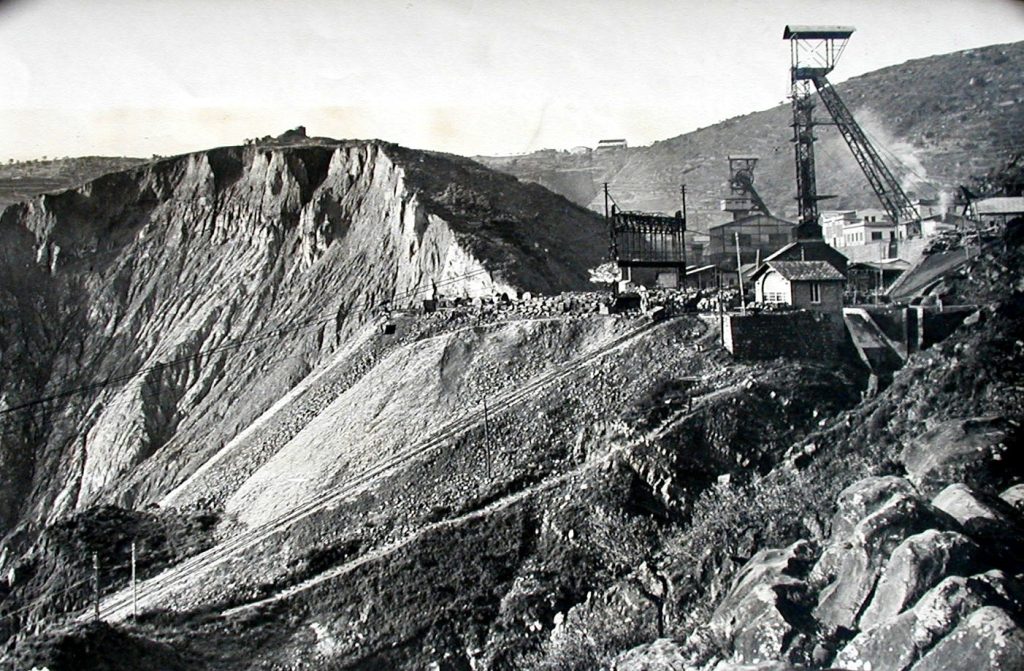
2026 Cardona begins the celebration of a series of commemorative anniversaries related to the centenary of the project in charge of the extinct Spanish Explosives Union to carry out the extraction of potassium salts by underground mining. This is intended to recall the importance of the investment made at the time, as well as the various industrial facilities with which to carry out the transport and treatment of ore extracted from the bowels of the earth for more than sixty years (1929-1990). And all this without losing sight of the impact it had at economic, political and social level on the municipality, marking a before and an after in the traditional and millenary exploitation of the salt of Cardona.
This commemorative cycle begins in May 2026, coinciding with the centenary of the opening and deepening of the two master wells of the future mining operation, and will continue until 2032, the centenary of the completion of work on the Maria Teresa well and castle, as well as its machine station.
Thus, the holding of the congress on salt in Cardona makes it possible to reclaim the industrial and mining past of this municipality and recall the importance of mining activity for the territory.
STRUCTURE OF THE CONGRESS:
There will be 3 sections:
1. Past. Geology, history and archaeology of salt.
2. Present. Current salt mines, valorization and musealization.
3. Future. Innovation, research and emerging technologies.
Past. Geology, history and archaeology of salt
Work on the geological origin of salt deposits and their relationship with the evolution of the landscape, as well as archaeological and historical studies on the exploitation of salt from prehistoric to contemporary times. Includes analysis of extractive technologies, economic and social uses, exchange and commercial networks and episodes of political and fiscal control, among others.
Present. Current salt mines, valorization and musealization
Contributions on active, traditional or industrial saline farms and their management models in the current context. It is also invited to present experiences in the valorization of the saltpetre heritage, musealization, interpretation of the landscape, cultural tourism and scientific dissemination, with special attention to its social and territorial impact. Environmental aspects and the study of the presence of extremophile organisms in saline environments are also covered.
Future. Innovation, research and emerging technologies
Emerging uses of salt and saline spaces, linked to technological innovation, energy transition and sustainability. Contributions are requested on applied research, new materials, energy storage, re-use of mining sites and future-oriented management models.

SCIENTIFIC COMMITTEE
President:
– Dr. Andreu Galera Pedrosa (Cardona Historical Archive)
Committee:
– Dr. Josep Maria Mata Perelló (SEDPGYM and SIGMADOT)
– Dr. Francesc Ponsa Herrera (Cardona Historical Foundation)
– Dra. Katia Hueso Kortekaas (IPAISAL and SEDPGYM)
– Dr. José Manuel Brandão (SEDPGYM, HTC-CEF and NOVA FCSH)
– Ainhoa Pancorbo Picó
– Agnieszka Prytek (Cracow Saltworks Museum in Wieliczka)
– Antonio Pizarro Losilla (SEDPGYM)
– Sónia C. M. Santos Rebocho (Rio Maior)
– Miguel Ángel Sebastián Pérez (SEDPGYM and UNED)
– Rafael Villar Moyo (SEDPGYM)
– Francisco Hernandez Ortiz (SEDPGYM)
– Margarida Genera Monells (ICHN and SEDPGYM)
– Octavio Puche Riart (SEDPGYM)
– Dr. Bernardo Lemos (Roteiro das Minas e Pontos de Interesse Mineiro e Geológico de Portugal)
ORGANIZING COMMITTEE
– Antonio Pizarro Losilla (SEDPGYM)
– Dr. Josep Maria Mata Perelló (SEDPGYM y SIGMADOT)
– Dr. Francesc Ponsa Herrera (Fundació Cardona Històrica)
Additional information:
- WHERE TO STAY?
Special congress package
EL VILAR DE LA DUQUESSA
https://elvilardeladuquessa.com/en/
Offer valid from June 3 to June 8, 2026
Prices include bed and breakfast
Single Room (Double for Single Use – DUI):
– 1 night: €135.00 / room
– 2 nights: €256.50 / room
– 3 nights: €364.50 / room
– 4 nights: €472.50 / room
Double Room:
– 1 night: €150.00 / room
– 2 nights: €285.00 / room
– 3 nights: €405.00 / room
– 4 nights: €525.00 / room
HOTEL BOUTIQUE BREMON
https://www.hotelbremon.com/en/
Offer valid from June 3 to June 8, 2026
Prices include bed and breakfast
Single Room (Double for Single Use – DUI):
– 1 night: €120.00 / room
Double Room:
-1 night: €135.00 / room
El Vilar de la Duquesa will be the venue for the gala dinner and the meeting point for transfers.
Promotional code applicable to both accommodations: CARDONASAL2026
Contact: [email protected]
Other accommodation options
- HOW TO GET THERE?
Plan how to get there or where to park



